Reclaiming the Label ‘Autistic’

This is a post by Bianca Cepollaro (Vita-Salute San Raffaele University), Marta Jorba (Pompeu Fabra University), Valentina Petrolini (University of Bologna).

Designed by Freepik

The word ‘autistic’ has recently been reclaimed, especially within neurodiversity movements. We can observe how it is used with pride in political slogans (e.g., “I am autistic and I am proud”), online communities (e.g., r/AutisticPride on Reddit, whose description reads: “a bunch of proud autistic folks”; #autisticpride hashtag on X), blog posts (e.g., “Autistic as a reclaimed word”), popular articles, and activism.

Derogation, Common Ground, and Why We Disagree

This is a post by Teresa Marques (University of Barcelona).

Consider how ordinary speakers argue about words like charnegogitano, or negrito. In some contexts their use is taken to be straightforwardly degrading; in others it is defended as neutral, affectionate, or at least nonderogatory. These disagreements are familiar and often heated. They pose a natural philosophical question: what, exactly, makes a term derogatory, and how should we understand cases in which competent speakers sincerely disagree about whether a word counts as a slur at all?

Assessing the Linguistic Data on Hedged Assertions

This is a post by Dario Mortini (University of Barcelona).

Simple ‘outright’ assertions serve a wide range of familiar communicative purposes in our daily lives: from giving directions (‘The Sagrada Familia is up that street to the right’) to sharing novel and interesting facts about the world (‘The new bakery in the neighbourhood sells apple cake’). However, we are not always well-positioned to make outright assertions. When uncertainty looms, we must settle for something weaker.

Tort and the Demands of Interpersonal Justice: A Reply to Professor Papayannis

This is a post by Gregory C. Keating (USC Gould School of Law).

In his excellent blog post Does Tort Law Really Care About You?, Diego Papayannis addresses a fundamental question of tort law and challenges my view of the matter as he understands it from my book Reasonableness and Risk (OUP 2022). The role of the law of torts is to secure us against harm at each other’s hands as we go about our lives in civil society. How then should the law of torts respond to unavoidable harm?

Ignorance Isn’t a Failure

This is a post by Oscar Piedrahita (University of Barcelona).

You’re mowing your lawn when your neighbor strolls over and asks, “Do you know how many blades of grass you’ve just cut?” You’d naturally answer no. But if they then say “So you’re ignorant of that fact?”, this second question would feel  stilted, perhaps even misplaced. Is this something you’re supposed to know? Of course you don’t know the count, but calling you ignorant of that trivial detail sounds like an unwarranted criticism.

Does Tort Law Really Care About You?

This is a post by Diego M. Papayannis (University of Girona).

Imagine you live just 50 meters away from a massive cement plant. The plant operates lawfully and takes every reasonable precaution, yet its dust emissions still cause severe damage to your property and health. Because the economic activity carried out by the plant is of utmost importance to your town, the court refuses to issue an injunction to put an end to the nuisance. Instead, it awards you permanent damages to compensate for all the harm suffered. Problem solved?

Can Genes Cause Because We Know They Cause?

Image attribution: Riin Kõiv

This is a post by Riin Kõiv (University of Barcelona).

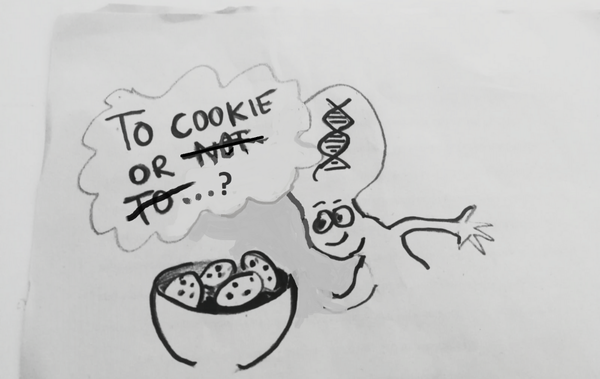
Imagine being told that personality, performance in math, substance addiction, or excess body weight has genetic causes. For many, this information plants a sense of inevitability — as if their personality, their math performance, or their body weight were in some sense “determined,” beyond their own control.


Linguistic Hermeneutical Injustice

This is a post by Martina Rosola (University of Barcelona).

Referring to non-binary people in heavily gendered languages like Italian, German or Spanish is difficult because of structural features of the language itself. As a result, non-binary people are systematically misgendered: they are referred to either in the masculine or in the feminine despite non identifying as either men or women. This puts them at an unfair disadvantage and gives rise to a distinctive type of injustice, namely to an instance of what Miranda Fricker calls “hermeneutical injustice”.


I Know How to Withstand the Skeptic

This is a post by Andrés Soria-Ruiz (University of Barcelona).

Think of the following: for all you know, you could be living in a computer simulation. Your friends might be so-called “Non-Player Characters”; your home, your surroundings might all be part of a sophisticated illusion. All of that is possible, and more worryingly, you—we—have no way of telling whether that’s actually the case.


What Is This Thing Called Propaganda?

Image attribution: Christopher Michel, CC BY 2.0 https://creativecommons.org/licenses/by/2.0, via Wikimedia Commons.

This is a post by Constant Bonard (University of Bern), Filippo Contesi (University of Cagliari) and Teresa Marques (University of Barcelona).

Propaganda is so ubiquitous a phenomenon in contemporary societies of all types that there would seem to be no problem in us understanding what it is. Still, we apparently continue to fall for it so often that perhaps we are not very good at recognizing it. It may be because we don’t really understand what propaganda is. Can the philosophical debate about how to define propaganda provide any help?